The Machete –
the small 4-string guitar
from mid 19th-century Madeira, Portugal
New!! The Machete TAB Book Volume 1 by Rob MacKillop – For Sale contact me: robmackillop@gmail.com
The Portuguese musician and academic, Manuel Morais, has, through his recordings and publications, brought to my awareness the beautiful music of the diminutive machete. I dedicate this page of my website to the machete, and will include here videos by myself and others, as well as links to important sites. I will try to answer any questions you might have, but all I have learned has come from Manuel – many thanks to him!
First, a video I made on a machete made for me by Canadian luthier, Scot Tremblay. The piece is Clara Polka, from the manuscript of Candido Drumond de Vasconcelos, from Madeira in 1846. I have attempted to use the thumb-only technique for the right hand. See more discussion on technique below. The machete is strung in gut from http://www.damianstrings.com
Now, Waltz No. 4 – note the repeated notes. I alternate index finger with thumb for these passages. Possibly they should be played by an up and down movement of the thumb, but a long nail is required for that technique.
The contents of the manuscript have been published in a book by Manuel Morais, along with a discussion of its provenance and contents –
Cândido Drumond de Vasconcelos: Colecção de Peças para Machete – Collection of Pieces for Machete (1846), published by Caleidoscópio [ISBN 972-8801-16-5]. The text is in Portuguese and English. Well worth hunting down! The music is all in the treble clef, and includes a guitar accompaniment part.
======================================
I have created The Machete TAB Book, volume 1 of which contains 10 pieces: Waltz No. 1, Waltz No. 4, Waltz No. 9, Waltz No. 11, Waltz No. 15, Waltz Favorita, Clara Polka, Roza Polka, Bollera No. 1, Bollera No. 2. See SCORES page for how to order or email me robmackillop@gmail.com
======================================
Thanks to Manuel Morais, here are photos of the machete by Octaviano João Nunes:

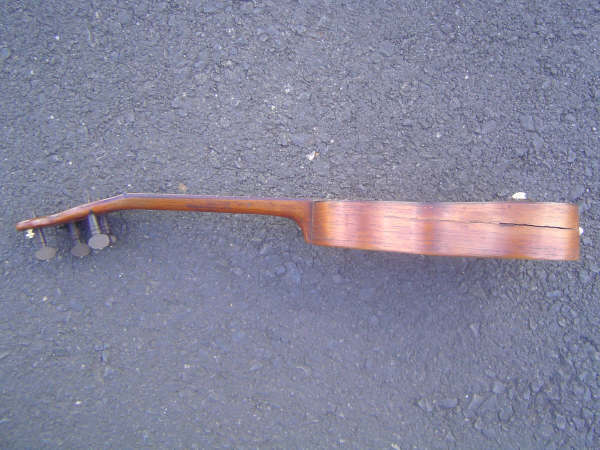
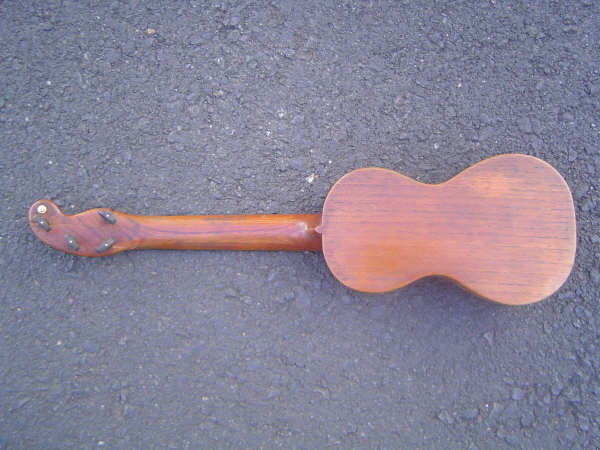
======================================
I am very pleased to announce that I have a machete made for me by the Canadian luthier, Scot Tremblay http://scottremblayguitars.com


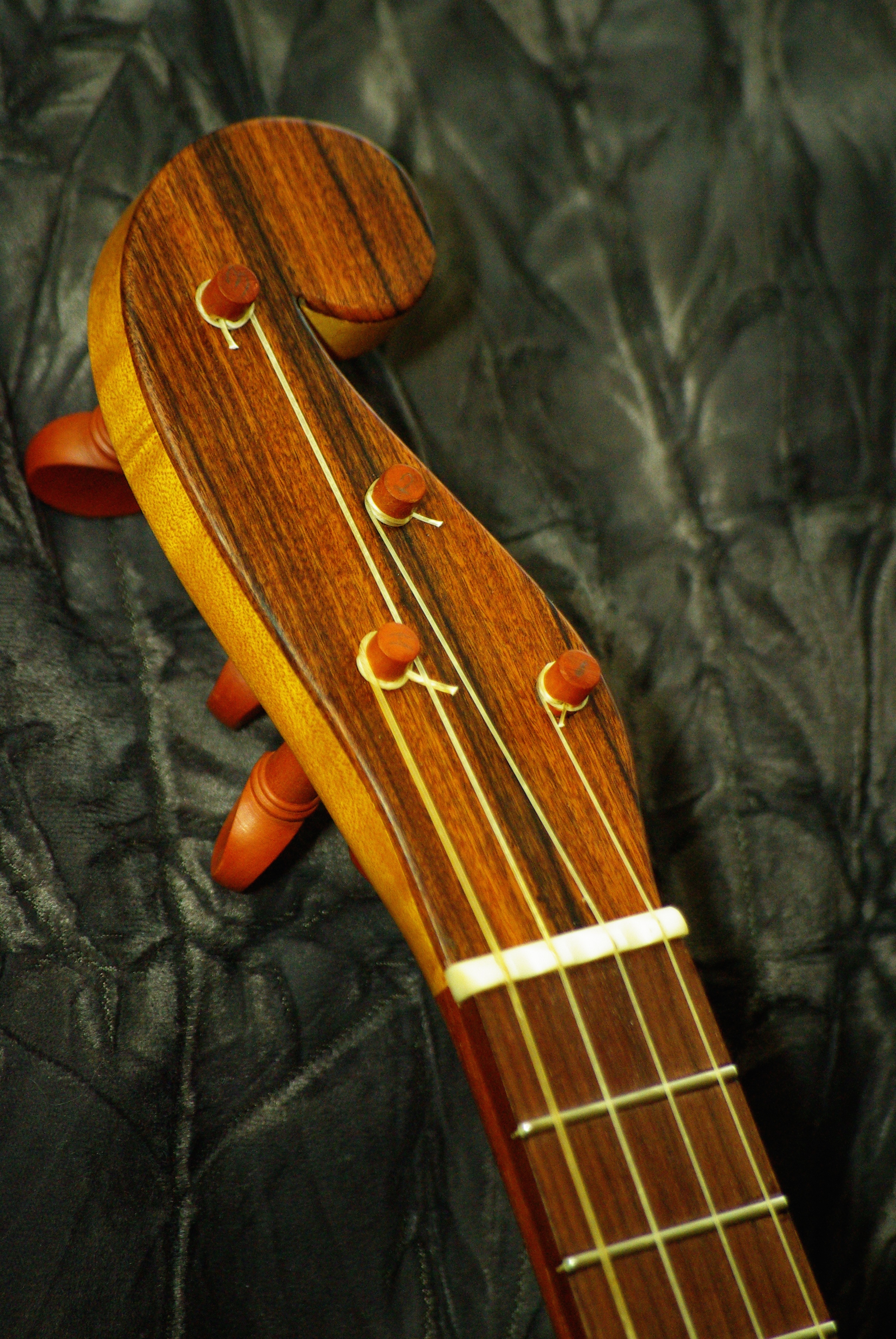

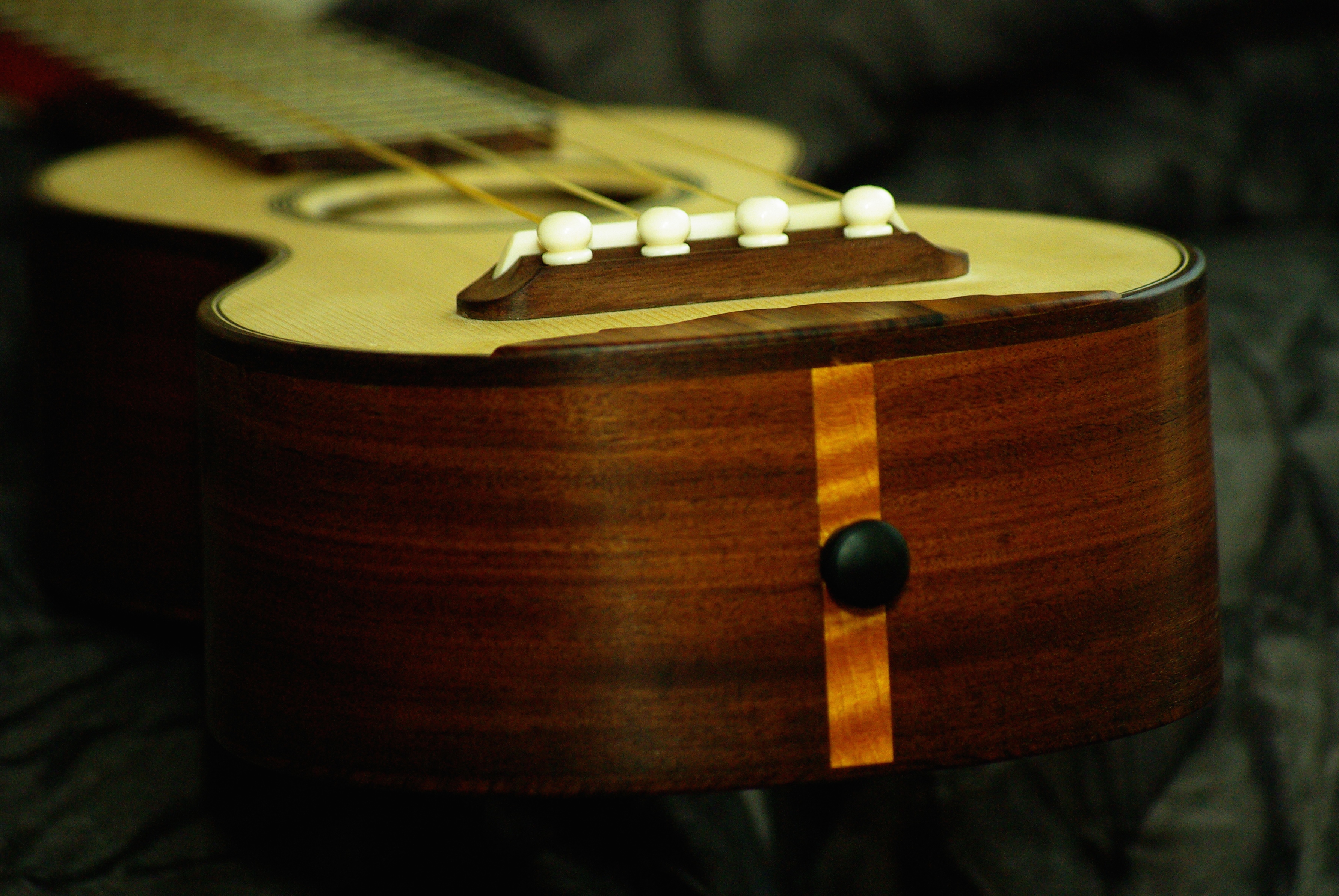
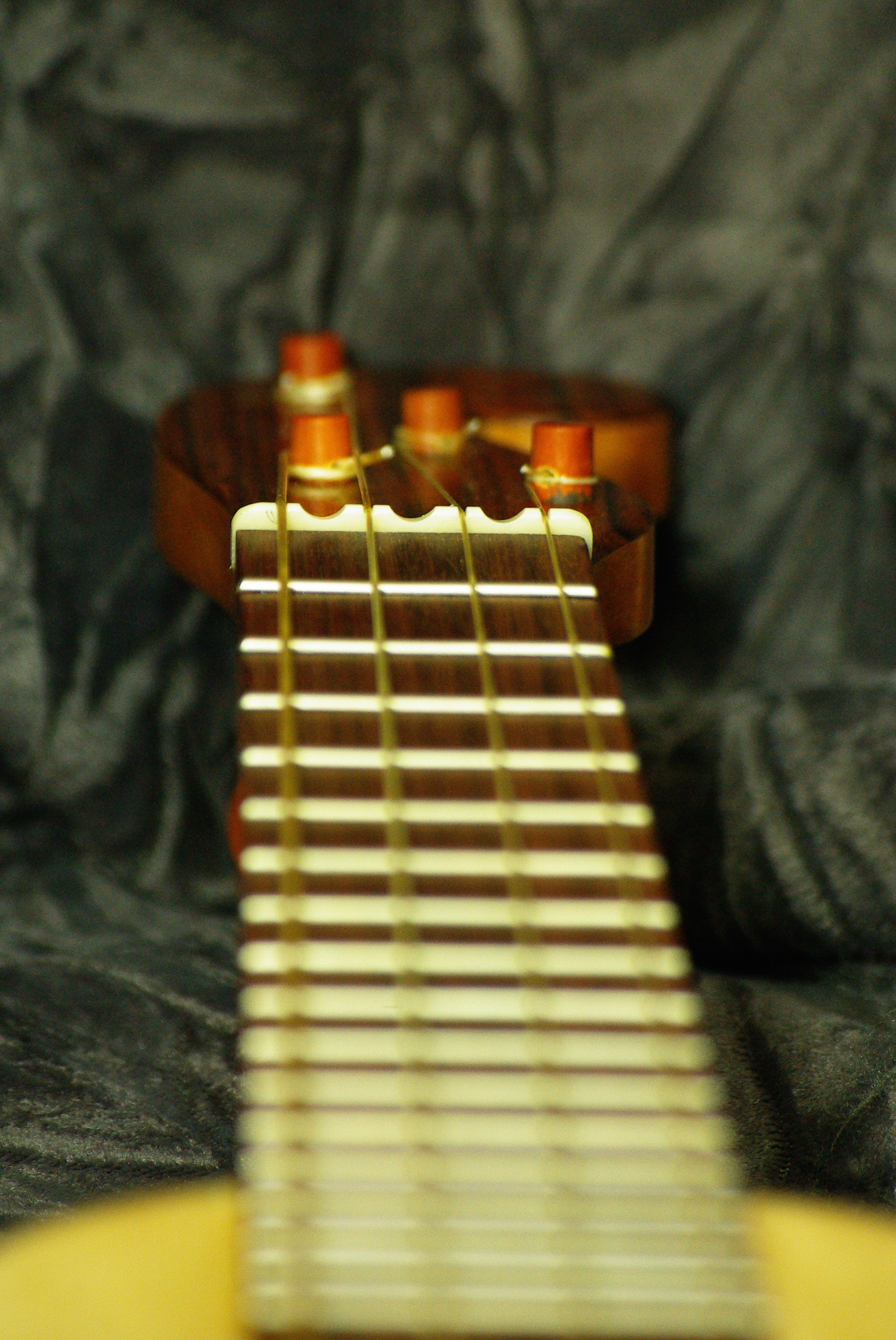
Needless to say, Scot Tremblay is Highly Recommended for your machete!
======================================
One performer who explored this repertoire is the great, but sadly now deceased, John King. Here he is performing items from the Drumond Vasconcelos manuscript, on a similar copy of a Nunes machete.
1. March:
18. Waltz:
13. Bollera:
Manuel Morais formed an ensemble to explore the repertoire in depth, the Quinteto Drumond de Vasconcelos. These videos are well worth watching. From the Concerto de estreia do Quinteto Drumond de Vasconcelos, dia 12 de Junho de 2010, Teatro Municipal Baltazar Dias – Funchal, Madeira. Valsa n.º18 (Candido Drumond de Vasconcelos)
Manuel Morais – viola e direcção artística
Mónica Monteiro – soprano
Joana Amorim – flauta traversa
Roberto Moritz – machete
Vitor Filipe – machete
And with voice and flute:
A different perspective:
A couple of recordings:
In English:
And a little video of Madeira with contributions from a performer and a luthier. This video shows the modern machete technique and physical structure:
TECHNIQUE
The (non re-entrant) tuning from bass to treble is d’ g’ b’ d” – a chord of G major. The technique is discussed in Manuel Morais’s book mentioned above, but the manuscript by Drumond de Vasconcelos is not clear in every respect, and some guess work is involved. Other manuscripts require an e’ on the top string.
There are descriptions of folk players using the thumb extensively, yet there are passages on non-adjacent strings at allegro tempi which require one other finger. Judging by the above videos, some players (as, for example, John King) attempt to use the thumb almost all the time (with some difficulty, it must be said, in some passages), and some players who use a more classical guitar technique of alternating the index and middle fingers, as well as playing the passages in parallel 3rds with the index and middle fingers.
My own instincts have led me to combine thumb work, especially on parallel 3rds passages, with alternating thumb and index in scale and contrapuntal passages. I plant the little finger on the soundboard. As for strumming, sometimes I use the thumb, sometimes the index or middle, and sometimes a complete rasguado of all fingers, with or without the thumb, depending on the passage. The thumb work in the parallel 3rds passages seems to impart a unique flavour to this music, a touch of the folk influence. However, this whole world of the mid-19th century machete is new to me, so I might well revise my technique as my understanding of the subtleties of this beautiful music develops.
The music from the Drumond de Vasconcelos manuscript displays a classical repertoire, typical for the early to mid-19th century, at times sounding similar to the works for guitar of Fernando Sor; but at other times a native folk influence can clearly be heard. As such, I believe the music of this manuscript demands a flexible technique, one able to bring out both the classical and folk elements.
I have tried to play the pieces while using a thumb pick, or thumb and finger picks, but found many passages impossible to play – either physically impossible, or not to a level of what I would describe as being musically acceptable. I’ll leave the picks to others more skilled in the practice than I.
Please return later in the year, as more videos and commentary will be added.
 Rob MacKillop ~ Musician
I did read & listen with interest! Thanks for the good work.
Interesting
I cannot help but wonder what the connection is between the Machete and the very similar Renaissance guitar, interestingly tuned as the Ukulele but with both octaves on the fourth course. There seems to be an assumption the two are not connected because of lack of definite evidence, but I would suggest we assume there is a connection unless there is good evidence to the contrary.
Any thoughts?
nick gravestock
Hi Nick,
It is tempting to make connections between similar instruments, but difficult to prove beyond doubt. I’m no organologist, so do not feel equipped to offer an intelligent analysis. The machete music seems to be for two tunings, dgbd’ and dgbe’ (the pitch might be variable depending on the string length), and both tunings are in use in Hawaii but with the 4th string up an octave. I think of the machete as a small 4-string guitar which might well have been connected with the Renaissance guitar, in the same way that the 6-string classical guitar developed from the 6-course guitar. The great thing about the machete is that we have a dedicated repertoire of good quality, dating from the 1840s. Some of the pieces are several pages long, and quite Sor-like. I will be recording more when my machete arrives. I just hope fingers are not too long!
Hi Rob:
I would very much like to see you do a book of ukulele arrangements on this music like your Sor book. I would buy it right away!
Thanks, Marc, but I don’t have a Sor book…
Sorry, I meant to write like the Sanz book! I’m working through it with two friends right now, and we are enjoying the rewarding arrangements immensely. Thank goodness the CD is included, because we pick up a lot from your interpretations as well. I”m more of a late beginner/early intermediate, so we slow them down, because your speed and technique are breathtaking. But the arrangements are so good that they sound great at different tempi. I find the tonalities and phrasing you create beautiful. It’s an inspiration. Thank you.
OK, that makes more sense 🙂
Glad you are getting a lot out of the book. To help your technique and musicianship, you might benefit from working through my latest book, 20 Easy Fingerstyle Studies for Ukulele (again, Mel Bay) which goes from easy to advanced intermediate, with each solo recorded slow and faster.
Any questions on any of the books, just ask.
I have many questions, but one big one that I hope won’t task your patience and gracious offer of help. I have your 20 progressive exercises, and the 20 easy exercises book is on backorder with Amazon but will be coming, along with the Celtic book.
My question is about using the thumb for both the 4th and 3rd string. A friend taught me to use one finger assigned to each string, but now I notice that many people use the thumb for 4 and 3 (and you suggest it in your Creative Right Hand Arpeggios page).
So, should I always try to do that? Why? For example, in the first C scale exercise in 20 progressive exercises, should I always use the thumb for the 3rd string as well as 4th? Is there a general rule or guidelines for when to use the thumb for 4 and 3, and when to use one finger for each string (T for 4, i for 3, m for 2, a for 1)?
Any light you can shed on this I would greatly appreciate, so I get the most out of the exercises and use the best fingering for the pieces!
I use two right-hand positions: thumb on 4, index on 3, middle on 2 and ring on 1, and also thumb on 4 and 3, index on 2 and middle on 1. I have some exercises in my studies books for both techniques. Eventually you should be able to move with ease between the two. My most used position is the second, with the thumb moving between 4 and 3. Hope that helps.
Hello Rob: I wanted you to know that I received the 20 easy studies book, and now I see that by playing them I”m learning when to use 3-finger and 4-finger approaches. This books is terrific and is helping me to make progress in the Sanz and Celtic tunes books. Thanks for your replies, and I submitted a nice review of the book to Amazon.com. If you ever have tab/music for the Clara Polka or other Madeira pieces, please post to your web site to buy!
Thanks, Marc! Much appreciated. I read the Clara Polka piece from a published book which doesn’t have tab, and it was given to me as a gift. I would not give that one out as the book is available, although I have had a number of requests for it. The book is well worth tracking down, as there is a lot of great music in it.
Thanks again for the review!
Pingback: What’s the Deal with Ukulele? |
Pingback: Review of 9th Meeting – 1st February 2014 | Scottish Lute and Early Guitar Society
Hi Rob:
I clicked on the link provided to look at the Machete TAB book Vol. 1, but the link didn’t work. Is it because it’s no longer available? I also tried to look for the Manuel Morais book as well, but had no luck in finding one as well.
Thank you
Hi Mike. Old link there. I’ve changed it now as the company I used to make purchases automatic ended up costing more than I was charging for the pdf! So, ordering details are here: https://robmackillop.net/scores/ – all you do is email me your request, and pay the cost via PayPal to robmackillop@gmail.com Apologies for this. I’m not a big business. Rob
Pingback: Exploring Ukulele Genres | Traditional Hawaiian to Pop and Jazz