Essays, Videos and Selected MP3 Recordings of
Fernando Sor’s Lessons, Exercises and Studies
This page is dedicated to the studies of Sor. Its aim is to help students of the guitar, especially those who have not heard a gut-strung guitar before, played without nails, and largely without the use of the annular finger. Sor had the ability to write beautiful miniatures for students, with good harmonic movement, elegant melodies, and good Classical and Romantic structures. All these studies are highly recommended.
===========================================
I’m delighted to announce my new album:
Fernando Sor: The Art Of The 19th-Century Guitar, Volume 1
This recording is devoted to 32 of my favourite studies by this towering genius of the early 19th-century classical guitar. It is a download-only album, available from iTunes, Amazon and CD Baby:
http://www.cdbaby.com/cd/robmackillop3 – where you can hear excerpts.
I use a modern copy of the type of guitar favoured by Sor, a Lacote by Michael Nalysnyk of http://www.historicalguitars.co.uk, using gut and silk strings by Aquila-Corde, specially formulated for the early 19th-century repertoire.
I have also tried to get as close as possible to the technique outlined by Sor in his Method.
Not familiar with Fernando Sor? Think Mozart and Schubert, with a Spanish-French influence…
The album is set at a low price, and once downloaded can be played on your computer, iPad, phone, or burned to a CD. The CD Baby page includes Programme Notes.
Please Like, Share, and Tweet about!

===========================================
Fernando Sor
The Sixteen Easiest Pieces
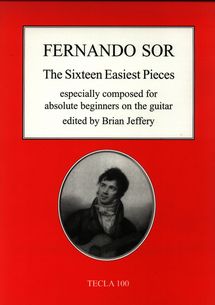
The leading present-day publisher of Sor’s music is Tecla Editions, run by Dr Brian Jeffrey, author of an essential-read biography of Sor, as well as this collection of sixteen of Sor’s ‘easiest pieces’. I think that this is an excellent edition for students at an early stage, and I present below free mp3 files and videos of each piece in the book.
I present here all 16 pieces in four videos, four pieces each. The guitar I am using is a copy of a Lacote – the type played by Sor – made by Michael Nalysnyk of http://www.historicalguitars.co.uk/ The guitar here is strung with Aquila nylgut, but to 19th-century specifications.
[There are more videos further down this page…]
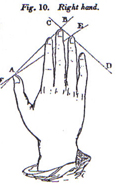
If the following sound files sound different to what you have heard before or have tried to play yourself, it is very likely because the guitar – a modern copy of a Panormo guitar (among those instruments recommended by Sor in his Method) – is tuned down a semitone from modern pitch, and is also strung with gut treble strings and silk bass strings manufactured by Aquila Corde. I also use a right-hand technique based upon that outlined by Sor in his Method (also published by Tecla), that is, mainly thumb, index and middle fingers, with only rare use of the anular finger, and I also play without nails, as advocated by Sor.
So, the instrument, the strings and the technique – all of these things make a difference. You must make your own mind up about the path you will take in the future with this music. For the moment, it is perfectly acceptable to play these pieces on a modern guitar, with nylon strings plucked by the nails…but I hope you appreciate the difference in sound.
16. Allegretto moderato – Op.31 no.3
 |
From Op.35: Vingt Quatre Exercises très facilesSor: ‘These present Exercises will be particularly useful to those people who will study following the method which I am about to publish, because my principal aim has been to put into practice the theory which it contains’ |
From Op.31 Vingt Quatre Leçons Progressives
No.1 in C Andante
No.2 in Am Andante
No.3 in D Allegretto Moderato
No.4 in Bm Andante
No. 7 in E
No. 18 in Bm Moderato
No.23 in E Mouvement de priere religiouse
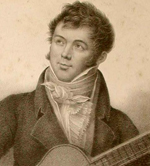
From Op.60 Introduction à l’Etude de la Guitare
Most of the first six studies are of one note at a time. On paper they are possibly Sor’s easiest studies, but beware…dangers lie therein. Remember to use only three fingers – thumb, index and middle.
VIDEOS
The following two essays were written in 2003 for my students. The first is an introduction to Fernando Sor’s technique, and how if differs from that of Aguado. The second is concerned with an Introduction to the art of the improvised Prelude and Cadenza. Both essays require revision…maybe some day…but both still are (hopefully) useful introductions.
Some Introductory Remarks PII2
Fernando Sor’s Guitar Technique – an overview
Preludes, Cadences and Composition for Guitar in 19th-Century Teaching Practice
Facsimile Score of Horetsky’s Preludes, Cadences and Modulations in every Key for the Guitar


Pingback: I Shot Myself...
I am watching you play Opus 60 No. 5. Are you playing the bottom four strings with your thumb even if the note is in the melody? And, for fingers one and middle, do you repeat the same finger if the note is on the same string? I am trying to play according to Sor;s instructions (and having fun!), but am a little confused about the right hand fingerings. Thanks!
Hi Richard. I’m not sure what you mean when you ask about my thumb “even if the note is in the melody”. I can understand your confusion regarding Sor’s technique, for, despite talking at length in his Method, he is unclear about many things. But, yes, he would often reserve the index for all the notes on the second string, and middle finger for the notes on the first string. Sometimes those two fingers would move to the second and third strings. It’s an unusual technique for a classical guitar player, but not unknown in folk and jazz fingerstyle guitar.
Good luck!
I think you’ve answered my questions. I’d love for you to post one of your Sor studies in slow motion, focusing on your right hand–but that might not be of general interest to your visitors. One thing I’ve noticed is that I play much more confidently when not using my “iffy” ring finger. And I I love the sound when using the flesh of my finger tips.
Also, I’ve been enjoying your Mickey Baker “lessons”.
Best Regards,
Rich
Pingback: Rob MacKillop - Fernando Sor